I am frustrated by articles in atheist magazines, blogs and forums in which proponents argue why they have their belief in a godless world.
As an atheist it needs to be clearer that this is not in my view, a belief per se, but more a way of ordering my steps.
I have no issue with those who believe in unsubstantiated systems that purport to define rationality to an environment.
My wider role is to inculcate the systems I use and if I can persuade others to use such systems.
I am not a total adherent of logic as logic assumes a known foundation and known interrelationships. As a tool to guide my reasoning it is useful.
To attempt to belittle irrational belief systems by applying logic is flawed and lazy, we must lead by example.
The best way to live is to base everything we do on gathered evidence, it would be even better to base our actions and behaviour on established reliable evidence.
I know by crossing a road on foot that should I use the crossing correctly I will be able to cross safely.
This however assumes a lot.
That the crossing rules will be obeyed by all players, that the technology used will function in the manner designed. That established theory on the physical attributes of mass backed up with established evidence is further validated.
We still do rely on belief to shape our behaviour and actions, whether we profess to be atheist or not, rational or irrational, open or closed-minded.
The fact is we are only aspiring to be rational and open-minded, the complexity of the world is so that to argue one possesses perfect knowledge and perfect decision making methodologies is to betray ones ignorance or desire for safety.
We do not know how the world is; we have a set of theories that have been established through evidence and so experience. We do not all perceive even the most familiar things the same. We do not all see colours the same way. To be fully rational then is an aspiration.
What we do know however is that as far as decision making methodologies go, it is far better to be aspiring towards rationality in a seemingly irrational environment than to believe, that is to accept as evidence, a system that states its theories show the rationality of said environment.
A system that is unable to provide reliable evidence of relationships and structure.
A system that asks you to believe its tenants are true.
A system that sometimes commands you to believe it is true so that you state openly that you now know how the environment is rational.
A credible system, which is based on creed, not objectivity.
I am aware of my perceptive abilities to a small degree; I am unaware of my unperceived perceptive abilities.
I am aware of my ability to grasp the meaning required of the words “objective” “rational” but am unaware of how others perceive them.
I know that given established rules if I cross the road at a given point, using the technology provided and assuming the rationality of all other actors, I will not be hit by a vehicle.
I do not analyse the outcome of my transaction and determine that a higher being has deemed it appropriate that I arrive safely on the other side. I do not determine if hit by a vehicle that a higher being has deemed that appropriate.
As a rational thinker, I know that there is no safety even after I cross the road, I know that all actors are not rational, or see reason the same way and may have themselves other reasons to affect their behaviour. I know that technology fails and so does perception. I know there are many other objects that could hit me instead of or aswell as a vehicle.
I know that a living entity exists as is and does not come in degrees of perfection so that one can be described as higher. I do not have a sustainable definition of “perfection”
Thanks to established evidence, learnt mechanisms to make rational decisions, an awareness of my own irrational prejudices, and knowledge of the volatility of our living environment, I can step off the kerb and believe I will make it to the other side conscious.
Monday, September 26, 2011

Thursday, July 14, 2011
"Why was education deemed to be necessary for the capital-less?"
"Why was education deemed to be necessary for the capital-less?"

The US has benefitted from its parents struggles and now sits atop of giants. Without a socio-economic and political struggle, the idea that the provision of education should be what one can afford remains, as logical but foundation-less.

We see the same debate in Obamacare. It seems illogical to invest in the well-being of others but try to see the societal gain rather than income loss. We struggle in Europe to understand why the Senate vote against such programmes, then spend billions on Prisons/Police/Military. "For the people....?"


The US struggles it seems with the notion of socialism and pays too much regard to individualism. Ive often wondered if the US believed it got rich through capitalism and not that capitalists got rich through it. Of course it now can see capital endeavour moving away from its shores in search of ever wider margins.

The organisation of Religion and of Capitalism have themselves very similar traits and in a love/hate way support each others ends.
Educated populations are more open minded, less norm driven, less ideological, fanatical and more peaceful. I would want people (notice I didnt use the word "government"), people (tax payers) to invest in a supporting the development of a peaceful and open minded society.

The next question is what is it about "education" as its packaged today that would merit investment in it being a public asset.
Sunday, February 27, 2011
Mechanised Computational Devices
Computers will never be totally secure or intelligent until they learn not to base all their decisions on their own programming and memory.

This is where Humans have the advantage, for example, you meet the gilr/boy of your dreams or so you feel, everything fits, right height, hair colour, interests, star sign and so on

Only your friend tells you something different, they say be careful, he/she is not for you, a month or two later or an hour into the first date you realise your friend was right, a computer however would persist confident in its knowledge that it is perfectly matched.
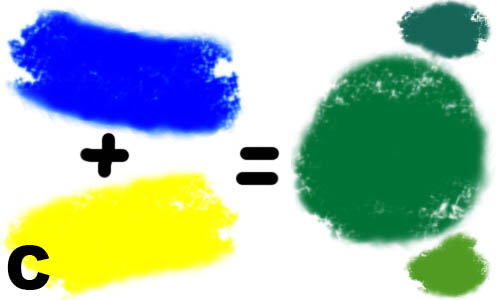
A computer can be made to recognise yellow as a shade of blue, as 1+1 equalling any designated number of its programmers choice. They can even redefine "1" so that the symbol represents "3005"

The networked computer however has an ideal opportunity to overrule its programmers views on the English Civil War, by use of co-relational memory facility.
 This enables it to compare its programmed memory with another computers memory and vice-versa, and so correct or at least present all sides of an argument to an audience.
Website to website. Searches will yield not websites but information within websites, combined data sets from 122 websites.

It will be able to ask other opinions and compare methods of storage, calculation for a more efficient, effective and comparably compatible methodology.
Eventually ultimate "truths" will rise to the surface, and myths and old wives tales re evaluated.

It will be able to realise yellow is not a shade of blue itself

Although it was "brought up" to believe and prove 1+1 equals 6010 it is able to see that it has been duped and the answer most commonly agreed is 2.

The process will be ongoing and truth will be fluid but present.
7th August 1997

This is where Humans have the advantage, for example, you meet the gilr/boy of your dreams or so you feel, everything fits, right height, hair colour, interests, star sign and so on

Only your friend tells you something different, they say be careful, he/she is not for you, a month or two later or an hour into the first date you realise your friend was right, a computer however would persist confident in its knowledge that it is perfectly matched.
A computer can be made to recognise yellow as a shade of blue, as 1+1 equalling any designated number of its programmers choice. They can even redefine "1" so that the symbol represents "3005"

The networked computer however has an ideal opportunity to overrule its programmers views on the English Civil War, by use of co-relational memory facility.
Website to website. Searches will yield not websites but information within websites, combined data sets from 122 websites.

It will be able to ask other opinions and compare methods of storage, calculation for a more efficient, effective and comparably compatible methodology.
Eventually ultimate "truths" will rise to the surface, and myths and old wives tales re evaluated.

It will be able to realise yellow is not a shade of blue itself
Although it was "brought up" to believe and prove 1+1 equals 6010 it is able to see that it has been duped and the answer most commonly agreed is 2.
The process will be ongoing and truth will be fluid but present.
7th August 1997
Why is a Raven like a Writing Desk?

This is a non-riddle by Lewis Carroll, it does not have an answer and still it is intriguing.

We crave an answer, we want there to be meaning, structure, purpose. Structure?
(See previous post.)
So
Question:
' Why is a Raven like a Writing Desk? '

Answer:
"Raven" is, if written correctly, one letter away from "Never", Whereas a Writing Desk if used correctly, is never far away from a letter!
Phew! Now I have meaning. I must go now....its late

Circles should square?
Everything is always as it should be,look at your hand,you cant conceive of a better way to assemble a hand.

The room you're in,its windows and doors can only be in once place really,after contemplation, after doubt there is only real place for everything.
Your boss could only act, look the way they do or they would not fit in.

They as you are rightly thinking would be "square!

They would be moved on, alienated or you would try to re-shape them.
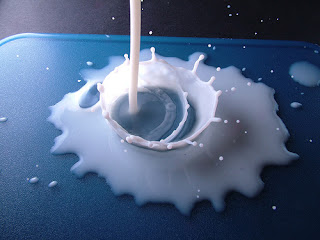
If items that don't fit are too square we need to add circles; so to reshape iron we need to add heat or if the object is too circular we need to add squares like Jello or a dry mophead to clean up split milk.
Confused? Too fluid, do I need to add structure? Ill explain....

Any structure must be complied of units that use all the structural space of that form, if not the structure either will not exist or lack integrity.

The outside shape (of a collection of mass), will differ from another outside shape depending on its content and process of collection.

One collection may wish to be spherical such as water molecules, and another cuboid such as salt mineral, or copper sulphate.

Is it that basic elements seem to strive for stability?

Or is it that given our environment only certain constructs are able to have integrity? Note its' perceived shape and really the only possible shape the rainbow could take. As it is a product of its environment and its elements.

Being spherical enables movement whatever the shape of the external container and so allows free movement and interaction and then enables the creation of combinations reductions of different but related shapes and elements.

Being square in an environment square does not facilitate movement.

Only in environments where spheres (circles) and cuboids (squares) are forced together can interaction occur and new shapes or collections of matter be formed that comprise of both spherical and cuboid identities or spherical identities.

If we did not use salt in cooking it would stay its chosen identity for as long as structurally sound. By adding water (spherical), shapes to the crystals it allows the salt to move more freely within the salt water environment to establish relations with oxygen, nitrogen hydrogen or any other matter in the water and so form new shapes or collections, be they biological in nature or not, and re-establish identity.

Once the spherical shapes disappear from the newly established transitory relationship, the salt will retreat to its previous identity and be stored effectively again happy in its new spherically barren environment.

If cubes and spheres combine to produce a Frog life form and the Frog is put in a microwave and all the spherical elements are removed, the Frog will eventually return to its most basic cuboid elements.

"From dust to dust"

Energy in the form of heat and wind can also allow cuboids in a cuboid environment freedom to interact by reducing and increasing the size of the cuboids and the the volume fill of the shape. This can be reduced by adding spherical collections of shpes. Fire is one example it can be restructred by adding, water or foam.

Anger by love perhaps

Love by anger perhaps?
Also an environment with spheres and circles will produce heat through interaction and the freedom within the structure itself.

Maybe the shape of structures could be the cause of life as we know it, but which comes first the internal mass or the external shape?

I am not proposing that such shapes or collections know they are a particular shape or even consciously choose their eventual shape, but merely asking what determines it?

How and when did Richard Dreyfus know when to stop?

How did Michaelangelo know David was ready?
My first thoughts are that the external shape is determined by its identity as an integral part of a larger external shape, like those Russian dolls

7th August 1997

The room you're in,its windows and doors can only be in once place really,after contemplation, after doubt there is only real place for everything.

Your boss could only act, look the way they do or they would not fit in.
They as you are rightly thinking would be "square!

They would be moved on, alienated or you would try to re-shape them.
If items that don't fit are too square we need to add circles; so to reshape iron we need to add heat or if the object is too circular we need to add squares like Jello or a dry mophead to clean up split milk.

Confused? Too fluid, do I need to add structure? Ill explain....

Any structure must be complied of units that use all the structural space of that form, if not the structure either will not exist or lack integrity.

The outside shape (of a collection of mass), will differ from another outside shape depending on its content and process of collection.

One collection may wish to be spherical such as water molecules, and another cuboid such as salt mineral, or copper sulphate.
Is it that basic elements seem to strive for stability?

Or is it that given our environment only certain constructs are able to have integrity? Note its' perceived shape and really the only possible shape the rainbow could take. As it is a product of its environment and its elements.
Being spherical enables movement whatever the shape of the external container and so allows free movement and interaction and then enables the creation of combinations reductions of different but related shapes and elements.

Being square in an environment square does not facilitate movement.

Only in environments where spheres (circles) and cuboids (squares) are forced together can interaction occur and new shapes or collections of matter be formed that comprise of both spherical and cuboid identities or spherical identities.

If we did not use salt in cooking it would stay its chosen identity for as long as structurally sound. By adding water (spherical), shapes to the crystals it allows the salt to move more freely within the salt water environment to establish relations with oxygen, nitrogen hydrogen or any other matter in the water and so form new shapes or collections, be they biological in nature or not, and re-establish identity.

Once the spherical shapes disappear from the newly established transitory relationship, the salt will retreat to its previous identity and be stored effectively again happy in its new spherically barren environment.

If cubes and spheres combine to produce a Frog life form and the Frog is put in a microwave and all the spherical elements are removed, the Frog will eventually return to its most basic cuboid elements.

"From dust to dust"
Energy in the form of heat and wind can also allow cuboids in a cuboid environment freedom to interact by reducing and increasing the size of the cuboids and the the volume fill of the shape. This can be reduced by adding spherical collections of shpes. Fire is one example it can be restructred by adding, water or foam.

Anger by love perhaps

Love by anger perhaps?
Also an environment with spheres and circles will produce heat through interaction and the freedom within the structure itself.


I am not proposing that such shapes or collections know they are a particular shape or even consciously choose their eventual shape, but merely asking what determines it?

How and when did Richard Dreyfus know when to stop?

How did Michaelangelo know David was ready?
My first thoughts are that the external shape is determined by its identity as an integral part of a larger external shape, like those Russian dolls

7th August 1997
Friday, August 13, 2010
Crying out for meaning....
I have been drawn recently to reappraise the use of metaphor not in a metaphrological manner, but rather in its ability to be perceived as designed by the issuer, especially as my use of nursery rhyme in my last article meant that to many readers the "dish did run away with the spoon" and the message lost as people focused too much on the allegory.

The ability to perceive meaning in metaphor is an important attribute of an aligned perspective. Required if we are to move beyond a metaphor to a dynamic process that enables actors to interrelate towards such aspirations and so affect source domains.

The ability to perceive meaning in metaphor is an important attribute of an aligned perspective. Required if we are to move beyond a metaphor to a dynamic process that enables actors to interrelate towards such aspirations and so affect source domains.
For some more than others it is important to ensure that the symbols and metaphors used are clearly and readily deciphered. Inter-relational complexity can lead to ideas being misunderstood and often misrepresented.(Freud, Marx, Foucault)
Privileging one dimension over others when interpreting metaphor often only obfuscates the real intention of creating the metaphor and leads to the interpreter often misjudging the role of other factors or their interrelation.


The need for a metaphor to be culturally shared and closely understood by the actors and activists involved is also a required prerequisite.As it is only in this manner that metaphor has any pedagogical or persuasive usefulness.
A metaphor must come from ones own experiences and must be readily interpreted by the listener. Something that is known to you, or has been experienced by yourself, but not by the listener, will not be readily as meaningful to the listener. As metaphors are an individuals recognition or results felt to be contingent, based on historical or cultural symbols means that without those references or the elucidatory narrative of the issuer can have no meaning in themselves.
As culture is changing and domains realigned metaphors become less sui generis or culturally specific and so more aspirational and generic, with a danger of a move towards a need to avoid them totally and be literal
(This move toward the literal is discussed in a further www.elucidate-erudite blog article, on empathic iconoclasm and its effect on the services provided by Business and Governments to their customers and voters. )
The difference between metaphor and extension is important.
As a metaphor, shows that the issuer, is in control of their perception.
They are aware that the metaphor is symbolic of a reality.
An extension shows a desperate lack of control by the issuer of a reality and a wish for the perceived reality to be different.


In such a manner it betrays the desires and lack of comfort of the issuer. A reflected negation of present order based on an assertion of past ways were better or past values more valued, is itself at once regressive and a cry for a new order tomorrow. However as it is rooted in assertion can only ever be contingently valid.
As what is out there as comprehended is not as it should be and so as it should be is communicated through metaphoric over-extension. Often in these cases the issuer has difficulty explaining the meaning of their extension, as its reasoning upon, at once betrays its innumerable absurdities.
The use of extension has been used precisely because the issuer feels discomfort and cannot explain literally what change they require to feel comfortable again.
Often when using symbols and metaphors it is important to understand the ability of your intended audience to perceive your use of the abstract or intention to ascribe a different meaning to an established symbol.
Many children today would not understand what the black lumpy plastic found on the back of Thomas the Tank engine replicas is meant to represent.

Without knowledge of coal and what coal is used for, as well as why it would be found on a steam train, and that the character of Thomas is meant to represent a steam train.
The black lumpy plastic becomes a part of the body of the character of Thomas when in inception it was merely a separate entity, carried by the steam engine as fuel.
The idea of civility as a metaphor for well-being or efficiency or economic revival is a tenuous one. This is often used by politicians to explain why crime rates are high or the economy is not growing as it should be.
The meaning derived is that if we were more civil as a society crime would fall, employment would rise and society could be fairer.
This supposition is one many feel they can subscribe to. The opposite that proves the rule being that in totalitarian countries people are not treat fairly and do not have the liberal freedom of others who live under more democratic governmental systems.
The conflated presumption being that things will only get better if more power is given to people in an inspirational way, so that they can themselves engineer a better society for all. The machinations of society and public policy creation, the concept of finite resources and opportunity cost decision making is ignored.

It ignores the inter-relatedness of all factors that must be considered when deciding social policy. It presents social cohesion as a solvable straightforward issue that with the will of the people themselves will occur.
It creates a perspective amongst activists for a "civil society" that those who don’t work with them are against them and their understanding of what is civil. It ignores "tolerating" and claims through ideation of such activists a ahistorical and aspirational standard that must be adhered to.
This will ensure movement from the present to the perceived target domain of civility for all within a perceived society. The process of interpretation of the metaphor giving it a dynamic and transformative power and the record of its transformative endeavour in turn historicises it and so gives it a sense of semblance with a scientific validity where in reality it has in itself as a notion, none.

The idea of a civil fairer society is not subject to scrutiny over its implementation but accepted as an idealised cognition. The use of metaphor here can be dangerously wielded as if what is envisioned or asserted occurs and similarity then can be substantiated, its attraction to many increases. The phrase "The night of the long knives" was not used by the SS to plan that night of political assassinations, nor was it in general use in Germany at that time, but has been assigned and is validated by those events so that now it is even used to describe any reshuffle of political authority.
This target domain has no historical reference, but is referenced as if it has existed previously. It is metaphoric but is accepted not as metaphor by audiences but as something that is achievable with will and freedom.
Speaking "Klingon" as many fans of the TV show "Star Trek" have done, does not give the language validity. Charting the edification of learners of Klingon and struggles to promote the language neither. But to the actors involved it does provide a sense that the language has validity comparable to English or Greek and it is in this way that the dynamic process of efforts to transform domains is maintained.

The meaning attributed to metaphors then is sometimes earned and other times ascribed through experience or at inception. The idea that shapeless clothing confers a humility is something that is socially conferred and so such meaning is subject to re-interpretation and movement.
The emblems of sports car manufacturers were not in themselves intrinsically meaningful but have come to convey meaning through experience of others.
In this way symbols have in themselves become metaphoric and more importantly their intended meaning lost to many, who fail to see why shapeless clothing should be indicative of humility or why the double R logo is held in such high regard.
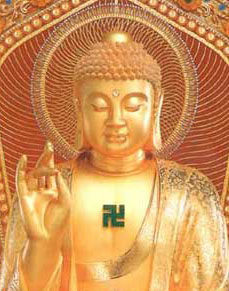
The hijab is symbolic but has an ascribed meaning and that meaning is apparently derived divinely and so is not open to reinterpretation. It is also practical given the terrain of deserts and climate however this meaning has been lost to those not accustomed to the benefits of dark colored clothing and sandstorm winds.

This means that such symbolism and inferred meaning is lost to many and those who subscribe to the metaphor intended must persist with such symbolism despite its loss of influence and even additional meaning earned or ascribed by others not familiar with such cultural meanings.
Passing the port to the left, not eating pork, chilling Beaujolais are all behaviour that held meaning once but now are continued because of tradition without a clear reference to the reason why.

Wearing shapeless clothing and paying more for a Jaguar car than another car is continued despite its intended rationale being lost to such a point that people will pay more for a Ferrari Key-ring chain continue to wear a burqa and not know why; its fixity having changed as domains change.
The concept of a good and fair society is also open to interpretation with citizens of Iran supporting the removal of the Shah in order to bring fairness and goodness as defined by the ayatollah back, now feeling that goodness and fairness is again required and that the ayatollahs understanding is not in line with theirs.

Citizens ofEgypt
Whist others sit in coffee shops inRussia
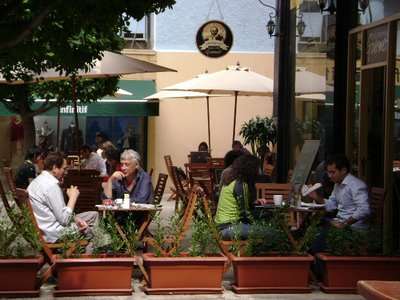
Citizens of
Whist others sit in coffee shops in

What is inferred by symbols and so metaphor is constantly open to reinterpretation but whereas modern corporations can change their logos to reflect these changes in perception other people and other organisations feel unable to tamper with customs, symbols and metaphor.
This in turn means it is harder to use phrases like "big society" and expect a community to emerge that truly is in sync with its intended meaning.
.jpg)
Though there may well be an acknowledgement of similarity,( similarity is still used incorrectly as a benchmark for truth), there are fundamental differences of inference. It is in the activists or subscriber's expression of how to achieve a big society that conflict will occur.
The role of the state in the maintenance of the metaphoric extension is interesting as it does not lessen.The state then will take the role of arbiter and supporter of those involved in their pursuit of happiness. Big society then requires a bigger government to resource and facilitate the dynamic.

Institutions are created and/or reformed and laws passed to ensure that movement as pushed for and jostled over by activists are maintained. The call here is for metaphor-free argument, a scientific language, fixated on the desire for literal definiteness that will result in an environment where thoughts are clearer and distinct as the ignes fatui and ones attempt at grasping intention and meaning from phrases and words is removed, leaving only the conveyance of precisely understood notions of things.
This in itself can lead to innumerable conclusions but as metaphor is in itself irrational, the outcomes from its use will irreducibly lead to one of three outcomes: Contention at the perceived outcome as it is seen to be in-line with aspirations and similar enough to claim achievement, or sedition as goal-posts are changed or definitions changed, or changes forced or finally contempt for the issuer of the extension which will take a generation to resolve and further reduce trust in those who promulgate. Rhetoric will invalidate itself as unless it is substantiated by historical outcome it has no legitimate foundation from which to support "hope"
Next article: Emphatic Iconoclasm and its effect on the perceived value of aspirational extensions amongst voters and consumers and a look at the changing role of Government and Business as they move toward the literal.
Other issues: Truth and Lies in a literal world, Comedy, literature and art v. literal consciousness, Religion and Light.
Subscribe to:
Posts (Atom)